Two numbers from Loggerhead Marinelife Center (LMC) sum up the last two nesting seasons around Juno Beach: 20,871 nests in 2025, and a nest on Feb. 11, 2026 that LMC calls the earliest ever recorded by the Center. Both come from LMC’s Feb. 11, 2026 news release. LMC has run this monitoring since its founder, Eleanor Fletcher, received a state permit in 1969. Here is what the numbers count, what they do not, and what they mean if you are on the sand.
- Loggerhead Marinelife Center says that in 2025 its researchers recorded a total of 20,871 sea turtle nests from leatherbacks, loggerheads and green turtles. Loggerhead Marinelife Center news release, Feb. 11, 2026
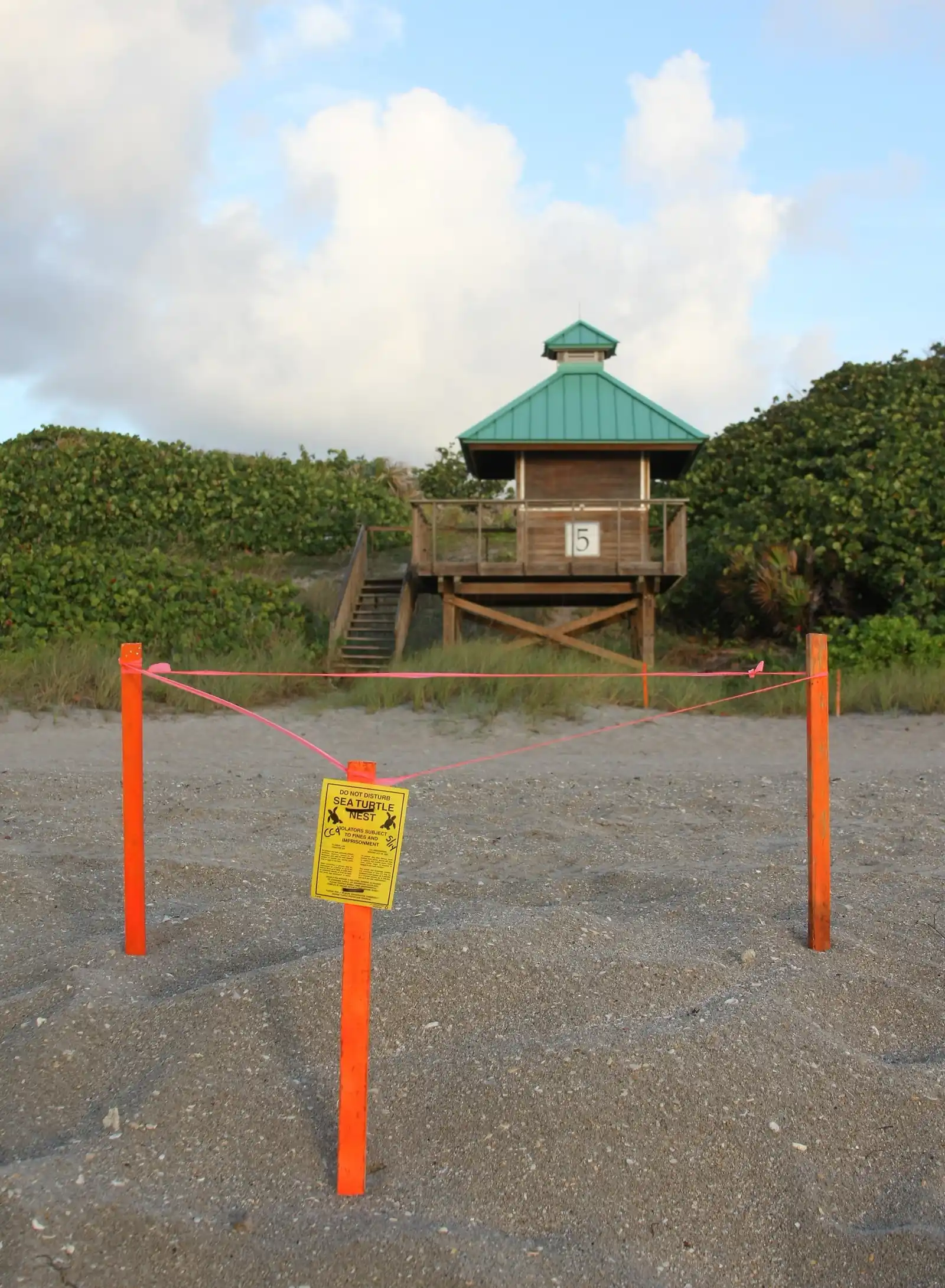
- Loggerhead Marinelife Center says that on Wednesday, February 11, 2026 it documented "the earliest sea turtle nest ever recorded by the Center". It notes the earliest nest on record in Florida was on February 4, 2025. Loggerhead Marinelife Center news release, Feb. 11, 2026
- Loggerhead Marinelife Center says its monitoring program officially began when founder Eleanor Fletcher received her permit from the state of Florida in 1969, and calls it one of the longest-running sea turtle monitoring programs in Florida. Loggerhead Marinelife Center: Research
What the 20,871 counts
LMC says its researchers recorded a total of 20,871 sea turtle nests in 2025 from leatherbacks, loggerheads and green turtles. That is all three species together, on the beach LMC monitors. Its research page and the 2026 release describe that as 8.5 miles, from the Jupiter Inlet Colony south to John D. MacArthur Beach State Park, down from 9.5 miles in earlier seasons, with FWC covering the rest of northern Palm Beach County. LMC’s leatherback page still describes a “7+ mile stretch”.
So the 2025 total is not a count for the Town of Juno Beach, and not a count for the beach beside the pier. Because the monitored stretch changed, we do not turn it into a per-mile figure either.
LMC calls its stretch “one of the most densely nested beaches in the world, with peak years of more than 20,000 nests.” That is LMC’s description, and 2025, by LMC’s count, was one of those years above 20,000.
- Loggerhead Marinelife Center's research page and Feb. 11, 2026 release say it now monitors an 8.5-mile stretch (down from 9.5 miles in earlier seasons, with FWC covering the rest of northern Palm Beach County). Its night-time leatherback page describes "the 7+ mile stretch of beach from the Jupiter Inlet to the northern boundary of John D. MacArthur State Park". Use 8.5 miles for the current monitored stretch. Loggerhead Marinelife Center: Research and Sea Turtle Health & Behavior pages
- Loggerhead Marinelife Center says its monitored 8.5 miles of beach, from the Jupiter Inlet Colony south to John D. MacArthur Beach State Park, is "one of the most densely nested beaches in the world, with peak years of more than 20,000 nests." Its Turtle Walk page says "Juno Beach, however, is one of the densest nesting sites for loggerhead sea turtles in the world." These are LMC's claims. Loggerhead Marinelife Center: Research; Guided Turtle Walks
How it sits beside Florida’s numbers
FWC publishes a statewide series from 27 core index beaches. On its index nesting survey page, loggerhead nest counts on those beaches range from a low of 28,876 in 2007 to a high of 71,009 in 2023, and FWC says over 50,000 nests were documented there in 2025.
These are not the same measure. FWC’s index counts loggerhead nests on a fixed set of beaches; LMC’s total counts three species on its own stretch. Do not divide one by the other. What the FWC series does show is how much loggerhead counts move from year to year, so read any single year’s total with that in mind.
- FWC says loggerhead nest counts on Florida's 27 core index beaches ranged from a low of 28,876 in 2007 to a high of 71,009 in 2023, and that in 2025 "over 50,000 nests" were documented on those beaches. FWC: Index Nesting Beach Survey Totals (1989-2025)
What the Feb. 11 nest means
LMC says nesting season runs from March 1 to Oct. 31 each year. The Feb. 11, 2026 nest came 18 days before that. LMC also notes that the earliest nest on record in Florida was on Feb. 4, 2025, so early nests are not unheard of in the state. LMC says the three species nest in different, often overlapping periods, in this order: leatherbacks, then loggerheads, then green turtles. It calls the leatherback the least common of the three.
For visitors the early start had one practical effect. On Feb. 19, 2026 LMC moved the Juno Beach Pier to sunrise to sunset hours, citing early nesting, and it has not posted an end to that notice. Our winter hours article explains why that matters on Nov. 1.
- Loggerhead Marinelife Center says nesting season "runs annually from March 1 to October 31." FWC's lighting guidance likewise says decorative lights should stay off until "after sea turtle nesting season ends, October 31." Loggerhead Marinelife Center: Research; FWC: Sea Turtles and Lights
- Loggerhead Marinelife Center studies leatherback, loggerhead and green turtles, which nest "during different, often overlapping periods", with leatherbacks first, then loggerheads, then green turtles. It says the leatherback is the least common of the three. Loggerhead Marinelife Center: Research
- Above its seasonal hours, Loggerhead Marinelife Center posts: "Due to early sea turtle nesting activity, effective February 19, 2026 Pier hours are sunrise – sunset." The page does not say when the winter late-night hours return. Loggerhead Marinelife Center: Juno Beach Pier, Hours
What it means on the beach
On Oct. 19, 2026 nesting season had 12 days to run, to Oct. 31. LMC’s release asks beachgoers to:
- Never approach or touch a nesting turtle.
- Keep lights off on the beach at night, including flash and phones.
- Let hatchlings crawl to the sea on their own.
- Use marked beach accesses and stay off the dunes.
- Take chairs, umbrellas and gear off the sand before dark.
- Fill in holes and knock down sandcastles before you leave.
LMC adds that touching, prodding or shining lights on a nesting turtle, and removing hatchlings from a nest, is illegal. If you find a hatchling heading the wrong way, LMC says it can go to the 24-hour rescue cooler at the entrance of the Center, carried in a bucket with damp sand and no water. For an injured turtle, call FWC at 888-404-3922. Palm Beach County also bans balloons at Juno Beach Park and Loggerhead Park to protect sea turtles.
- Loggerhead Marinelife Center asks beachgoers never to approach or touch a nesting turtle, to keep lights off including flash and phones, to let hatchlings crawl to the sea on their own, to use marked beach accesses and stay off dunes, to remove chairs, umbrellas and gear before dark, and to fill in holes and knock down sandcastles. It says touching, prodding or shining lights on a nesting turtle, and removing hatchlings from a nest, is illegal. Loggerhead Marinelife Center news release, Feb. 11, 2026
- Loggerhead Marinelife Center says a disoriented hatchling can be brought to its 24-hour rescue cooler at the entrance of the Center, carried in a bucket with damp sand but no water. Loggerhead Marinelife Center news release, Feb. 11, 2026
- Loggerhead Marinelife Center says: "If you spot an injured sea turtle, call Florida Fish and Wildlife Conservation Commission at 888-404-3922." Loggerhead Marinelife Center: Responsible Pier Initiative
- Palm Beach County says "The use of balloons is prohibited at this park" at Juno Beach Park and Loggerhead Park, a commitment by Loggerhead Marinelife Center and the county "to promote the safety and protection of sea turtles." Palm Beach County Parks & Recreation: Juno Beach Park
Lighting rules
FWC’s beachfront lighting guidance has three rules: Keep it Low, Keep it Long and Keep it Shielded. It says lamps must produce nothing but long wavelength light, 560 nm or greater, which is amber, orange or red, and that decorative lights should stay off until after nesting season ends on Oct. 31. FWC keeps a list of lighting ordinances by county and municipality, so the local rule for a given building is there. The guidance is written for beachfront lighting, which makes it relevant to anyone staying in a room that faces the sand.
LMC’s release also says the voluntary Sea Turtle Protection Zone has been expanded to include Palm Beach County’s entire 45-mile stretch of coastline.
- FWC's beachfront lighting guidance has three golden rules, Keep it Low, Keep it Long and Keep it Shielded; it says lamps "must produce only long wavelength light (560 nm or greater, which is amber, orange, or red)". FWC keeps a list of lighting ordinances by county and municipality. FWC: Sea Turtle Lighting Guidelines
- Loggerhead Marinelife Center's Feb. 11, 2026 release says the voluntary Sea Turtle Protection Zone (STPZ) has been expanded to include "Palm Beach County's entire 45-mile stretch of coastline." Loggerhead Marinelife Center news release, Feb. 11, 2026
Seeing turtles without disturbing them
LMC’s Guided Turtle Walks page reads “RETURNS SUMMER 2027”. The walks are offered from June 1, for ages 10 and up, scheduled from 9 p.m. to midnight; no flashlights and no photography are allowed, and there are no refunds if no turtle is seen. LMC’s Hatchling Releases are offered from Aug. 1, with no guarantee either. No 2027 dates or prices are posted yet.
Any day of the year, the Center itself, at 14200 U.S. Highway 1 in Loggerhead Park, is open daily from 10 a.m. to 5 p.m. with free admission. See our LMC guide, sea turtles page and events calendar.
- Loggerhead Marinelife Center's Guided Turtle Walks page is headed "RETURNS SUMMER 2027". The walks are "Offered from June 1", for ages 10+, and "officially scheduled from 9pm – 12am"; if no turtle has been spotted by midnight the program ends. LMC says it runs public walks Tuesday to Saturday in June and July under a state permit, takes only a small number of people per night, and gives no refunds if no turtle is seen. Loggerhead Marinelife Center: Guided Turtle Walks
- Loggerhead Marinelife Center says flashlights are not permitted and "We do not permit photography of any form throughout the program." Participants must be able to walk up to half a mile on the beach; dark clothing is preferred; it runs rain or shine and stays off the beach only for lightning. Loggerhead Marinelife Center: Guided Turtle Walks
- Loggerhead Marinelife Center says Hatchling Releases are "Offered from August 1" (ages 10+, 2 hours), using hatchlings from nests excavated earlier that day by its research team, with no guarantee and no refunds. Its Eco Experiences page says evening Hatchling Releases and morning Hatchling Discovery programs start August 1. Loggerhead Marinelife Center: Hatchling Releases
- Loggerhead Marinelife Center is at 14200 U.S. Highway 1, Juno Beach, FL 33408, phone 561-627-8280. It is "Open Daily 10 a.m. – 5 p.m." with "Free Admission". Loggerhead Marinelife Center: Plan Your Visit
Sea turtle nesting season 2027
Organiser date for 2027LMC says nesting season runs annually from March 1 to October 31, with leatherbacks first, then loggerheads, then green turtles. Nests can come earlier: LMC recorded its earliest nest on Feb. 11, 2026.
Annual season dates from LMC's research page.
Add to calendar: Google Apple / Outlook (.ics)
Free Source: Loggerhead Marinelife Center: Research, checked 2026-10-19
LMC Guided Turtle Walks (2027 season)
Page says "RETURNS SUMMER 2027" and "Offered from June 1"; June-July Tuesday-Saturday pattern; 2027 dates not yet published.A permitted, small-group night program to watch a loggerhead nest, ages 10+. LMC's page says the walks return in summer 2027; no 2027 booking dates or prices are posted yet. No flashlights or photography; no refunds if no turtle is seen.
Ticketed (price not captured) Source: Loggerhead Marinelife Center: Guided Turtle Walks, checked 2026-10-19
LMC Hatchling Releases and Hatchling Discovery (2027)
"Offered from August 1" on the LMC page; no 2027 schedule published.Evening releases of hatchlings from nests excavated that day, and morning nest-inventory programs, ages 10+. LMC gives an August 1 start each summer; 2027 dates and end date not yet published.
Ticketed (price not captured) Source: Loggerhead Marinelife Center: Hatchling Releases, checked 2026-10-19
Sea turtle questions
When can I see sea turtles in Juno Beach?
At Loggerhead Marinelife Center, any open day: it is open daily 10 a.m. to 5 p.m. with free admission, and you can see patients in the outdoor sea turtle hospital. To watch nesting, LMC's guided Turtle Walks are offered from June 1, Tuesday to Saturday in June and July, and return in summer 2027. Hatchling releases start August 1.
Source: Loggerhead Marinelife Center: Guided Turtle Walks; Plan Your Visit
What should I do if I hook a sea turtle?
Loggerhead Marinelife Center runs the Responsible Pier Initiative, which the county says covers this pier, putting rescue nets, signage and trained first responders on participating piers. LMC says: "If you spot an injured sea turtle, call Florida Fish and Wildlife Conservation Commission at 888-404-3922." Tell pier staff straight away.
Source: Loggerhead Marinelife Center: Responsible Pier Initiative
Can I bring balloons to the beach?
No. Palm Beach County says "The use of balloons is prohibited" at Juno Beach Park and Loggerhead Park. It says Loggerhead Marinelife Center and the county agreed the ban to protect sea turtles.
Source: Palm Beach County Parks & Recreation: Juno Beach Park
When is sea turtle nesting season in Juno Beach?
Loggerhead Marinelife Center says nesting season runs annually from March 1 to October 31. Leatherbacks nest first, then loggerheads, then green turtles. Nests can come earlier: LMC recorded its earliest nest ever on February 11, 2026.
How do Loggerhead Marinelife Center's Turtle Walks work?
LMC scouts search the beach while your group hears a presentation; if a loggerhead starts laying eggs, the group is led down to watch. The program runs 9pm to 12am for ages 10 and up, with no flashlights or photography. Places are limited by the state permit, and there are no refunds if no turtle is seen.
Is Juno Beach really one of the busiest turtle nesting beaches?
Loggerhead Marinelife Center says its monitored 8.5 miles, from the Jupiter Inlet Colony to John D. MacArthur Beach State Park, is "one of the most densely nested beaches in the world, with peak years of more than 20,000 nests." It recorded 20,871 nests in 2025 from leatherbacks, loggerheads and green turtles.
Source: Loggerhead Marinelife Center: Research; news release Feb. 11, 2026
What should I do if I see a nesting turtle or hatchlings?
LMC asks you to keep your distance, stay quiet and keep all lights off, including phones and flash. Let hatchlings crawl to the ocean on their own. It says touching or shining lights on a nesting turtle, or removing hatchlings from a nest, is illegal. A disoriented hatchling can go in LMC's 24-hour rescue cooler at the Center entrance, carried in damp sand.
Source: Loggerhead Marinelife Center news release, Feb. 11, 2026
What are the lighting rules for sea turtles?
FWC's beachfront lighting guidance is to keep lights low, long and shielded, using only long-wavelength amber, orange or red light (560 nm or more). FWC says decorative lights should stay off until nesting season ends on October 31. LMC asks residents to close blinds at night to cut sky glow.
What is the sea turtle hospital at Loggerhead Marinelife Center?
LMC's FPL Outdoor Sea Turtle Hospital has 17 patient pools, plus 8 ICU pools and a deep dive tank, 26 in all. Its veterinary hospital has CT and X-ray imaging, a surgical suite and a treatment room you can see through observation windows. LMC calls it the only sea turtle hospital between Orlando and the Florida Keys.
Source: Loggerhead Marinelife Center: Sea Turtle Hospital; About
Written by the Juno Beach Pier Guide Editorial Team. AI tools help us draft; people check every fact before it publishes.
Dates, rules and hours can change. The organisers have the final word: Loggerhead Marinelife Center (pier operator)